
Easy Challah Bread
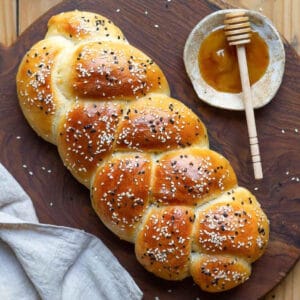
With its shiny golden crust, soft pillowy crumb, and beautiful braided shape, this easy challah bread looks every bit as special as it tastes. Rich and lightly sweet, it's wonderful fresh from the oven, toasted for breakfast, or turned into the most incredible French toast!
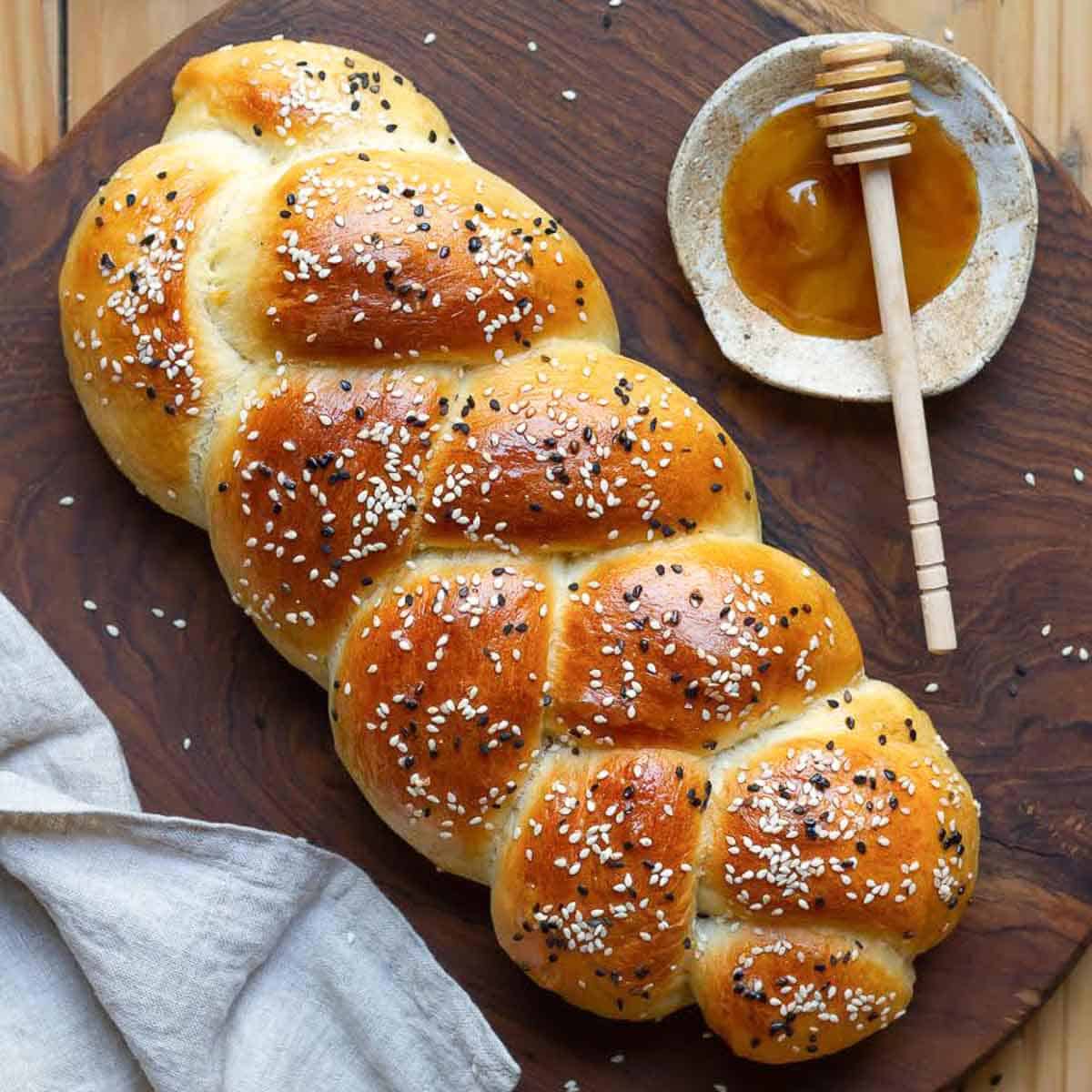
Challah is a traditional Jewish braided bread that's rich and soft, thanks to eggs, honey, and oil. While its beautiful braid makes it bakery-worthy, the dough is surprisingly easy to work with. So if you've been wanting to bake homemade challah bread, this easy recipe will show just how simple and rewarding it can be.
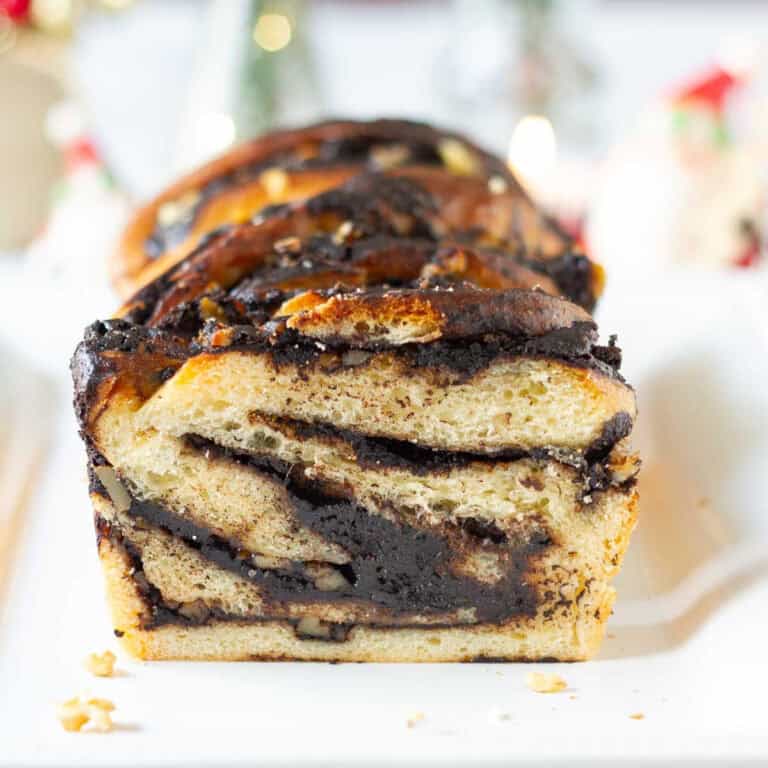
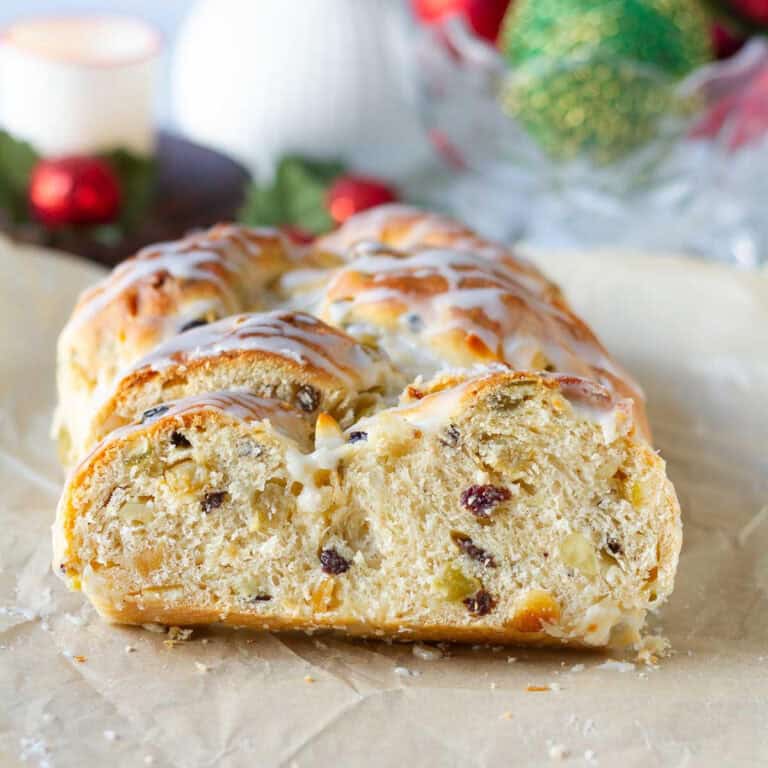
Looking for more festive breads? Try my chocolate babka, no-knead cranberry walnut bread, and pesto braided bread.
Jump toHideShow
Why You'll Love This Recipe
- Soft, fluffy, and rich with a golden crust, this challah bread looks like it came straight from a bakery.
- Makes 2 loaves. One to eat now, one to freeze or share.
- This homemade challah recipe uses basic pantry ingredients. You'll probably have all of them at home already.
- Easy 3-strand braiding. There are many ways to braid challah bread, but I've used the simplest one!
- Delicious in so many ways! Enjoy fresh with butter, use for making the best French toasts, sandwiches, or bread puddings, like this cherry bread pudding.
Recipe Ingredients
Flour: All-purpose flour works very well for making homemade challah bread.
Yeast: I used active dry yeast, but instant yeast works well too.
Water: Make sure you're using lukewarm water. The ideal temperature for activating yeast is 40.5 °C or 105°F.
Oil: I used olive oil, but feel free to use any vegetable oil.
Eggs: For richness and that super soft and fluffy crumb.
Honey: For that signature light sweetness.
Please see the recipe card below for detailed information about the ingredients and quantities.
How To Make Challah Bread
There are 5 steps to making challah: knead, proof, shape, proof again, and bake. It seems complicated, but it’s not. You'll have two stunning, show-stopping loaves ready in about 3-4 hours and an afternoon well spent.
Make the challah dough
Step 1: Combine eggs, water, yeast, olive oil, and honey in the bowl of your stand mixer.
Step 2: Add in the flour and mix till it forms a rough mass.
Step 3: Knead by hand for 10 to 12 minutes. I used my stand mixer, and at a low setting, it took about 9-10 minutes to form a soft, supple, and smooth dough.
First proof
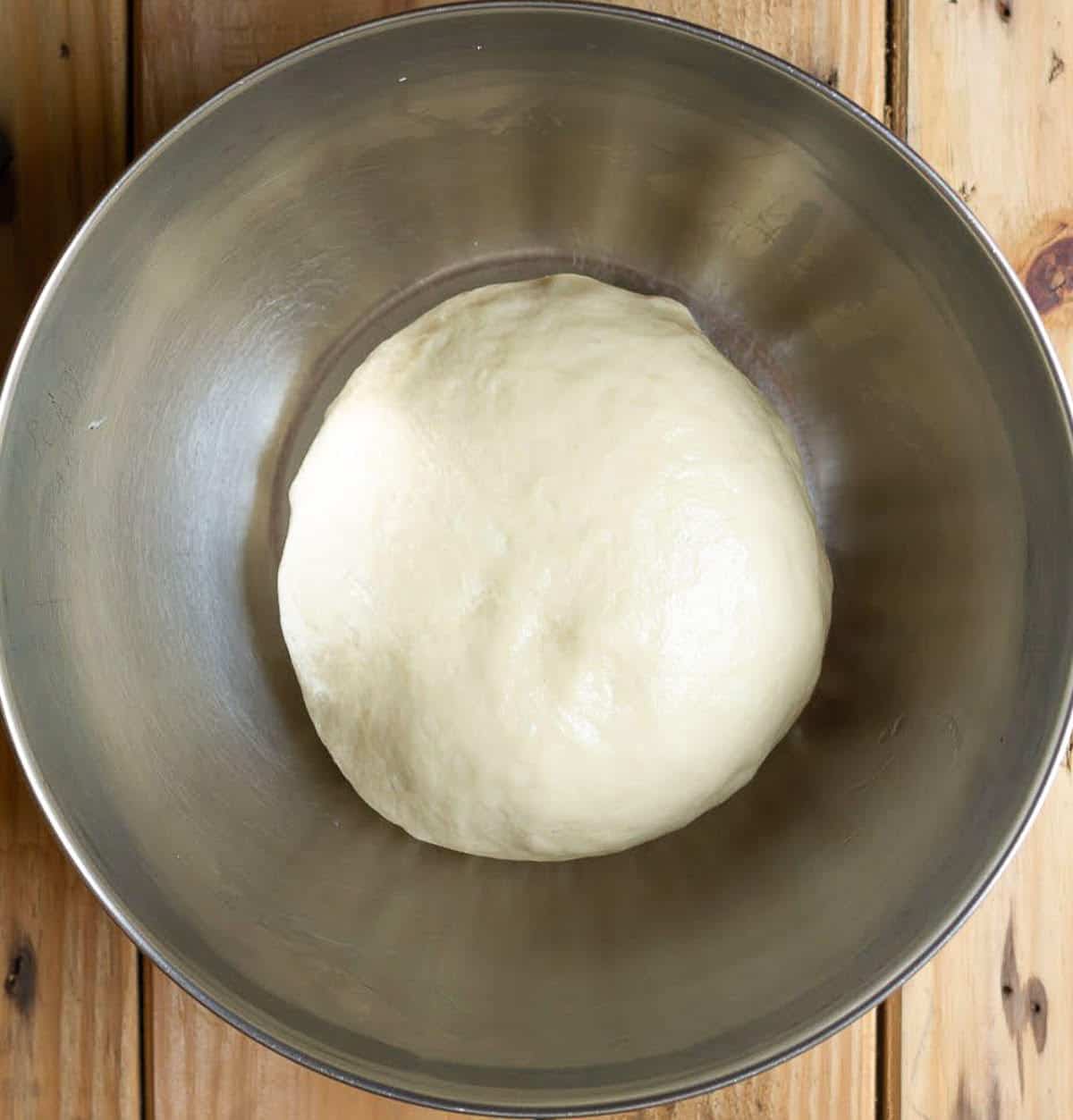
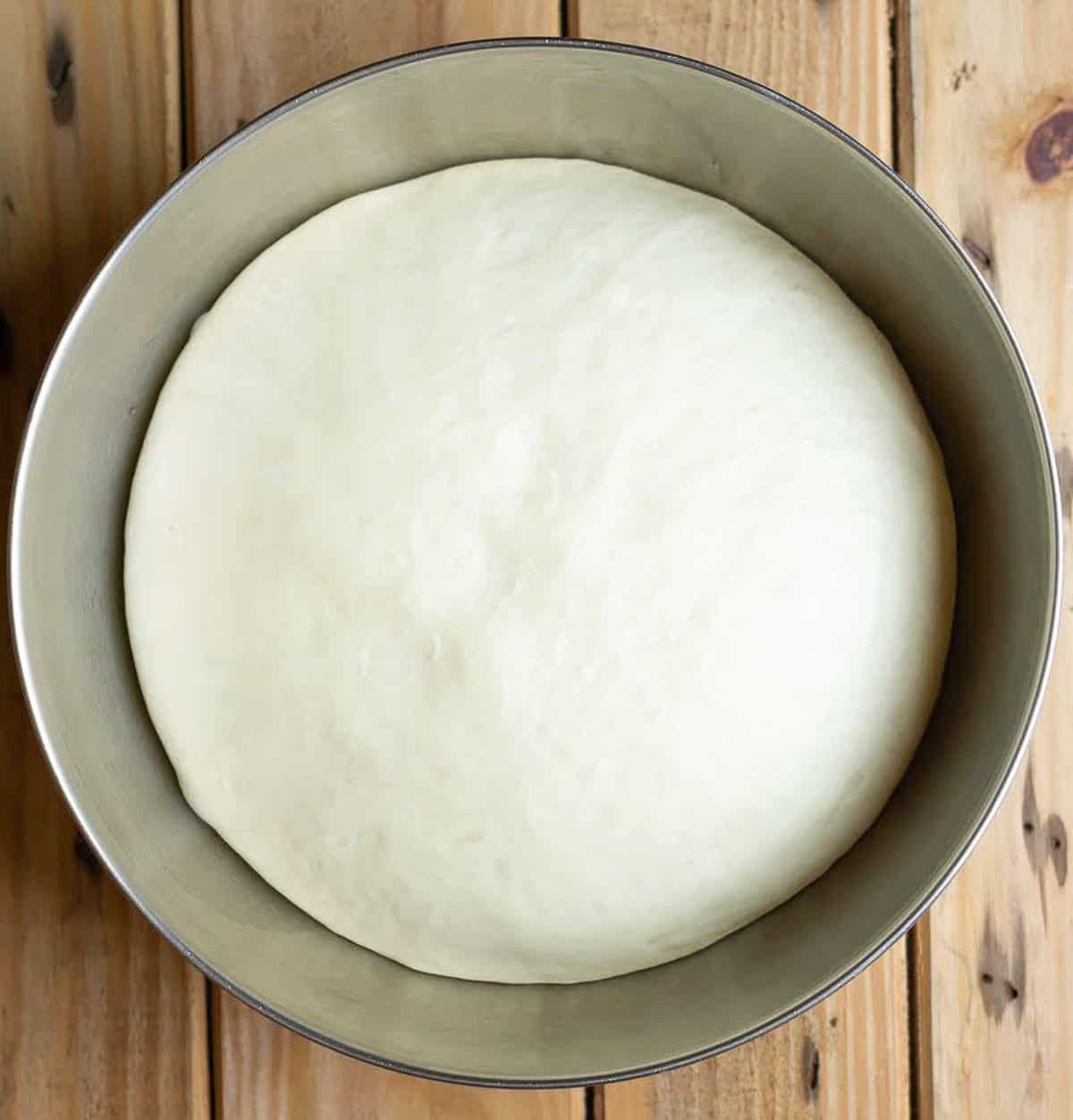
Step 4: Lightly grease a mixing bowl, place the dough in it, and cover with a damp kitchen towel or cling wrap.
Step 5: Allow the dough to rise and double in volume. It’s sweltering hot here, so my challah dough took 45 minutes to rise. But in cooler kitchens, it can take 1.5-2 hours.
Divide and shape the dough into strands
Step 6: Gently punch the dough down to help it deflate, then divide it into 6 equal pieces.
Step 7: Roll each piece into a ball, cover with a damp towel again, and set aside for 5 minutes.
Step 8: Taking one ball at a time, roll it into a 6- to 7-inch-long rope. Repeat for all others.
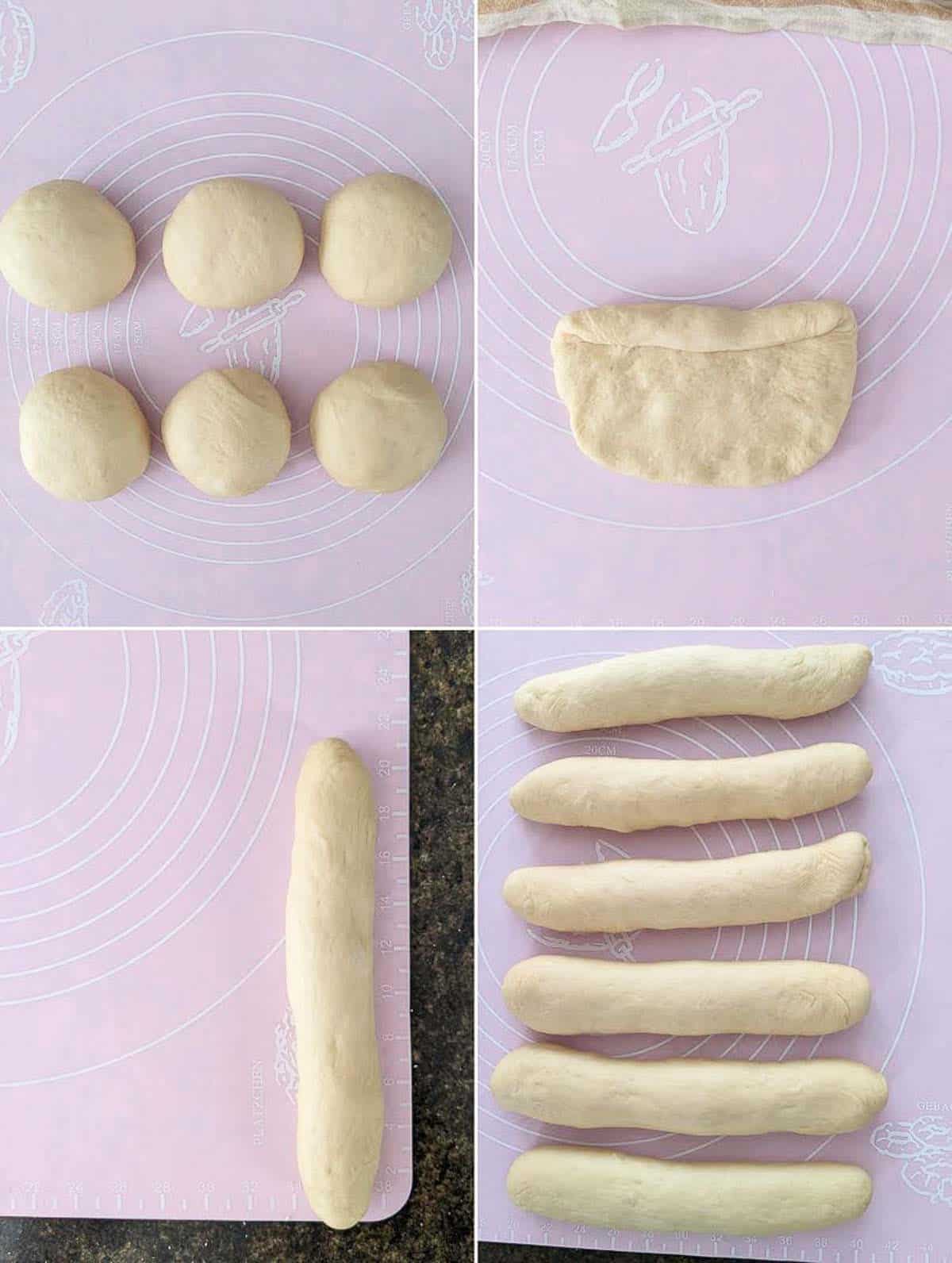
Step 9: Going back to the first rope, roll it again till it forms a 12-inch-long strand.
Step 10: Repeat for all 6 strands.
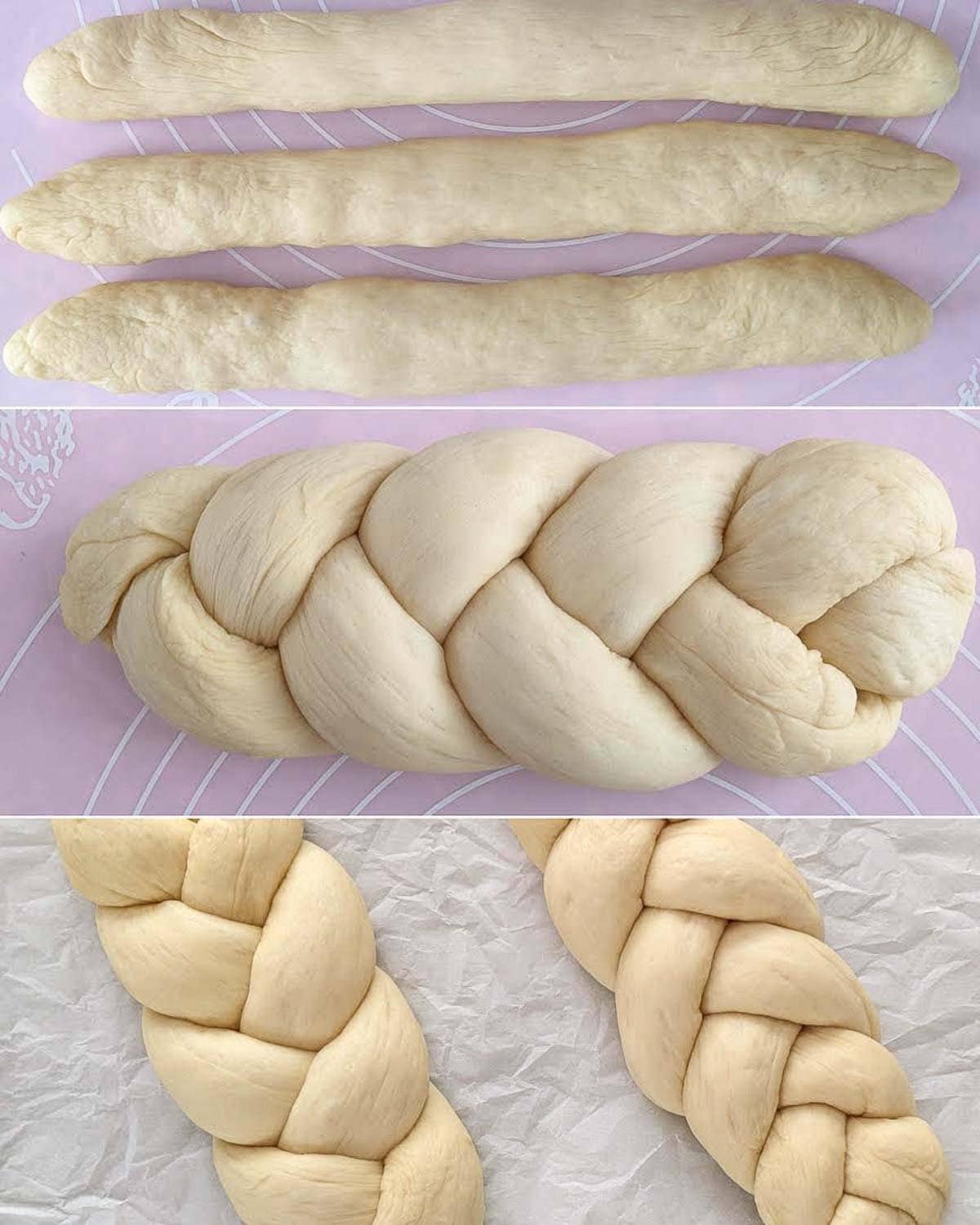
Step 11: Place 3 strands side by side, pinch the tops together, and braid them.
Step 12: When you reach the bottom of the braid, pinch the loose ends together and fold them under the loaf. Make sure you also tuck in the top end of the braid.
Step 13: Repeat with the remaining three dough strands.
Second proof
Step 14: Place the loaves on a parchment paper-covered tray. Cover with a kitchen towel again and let it rise for a second time till puffy. For me, it took about 35 minutes.
Step 15: Brush the top with egg wash and sprinkle sesame seeds on top.
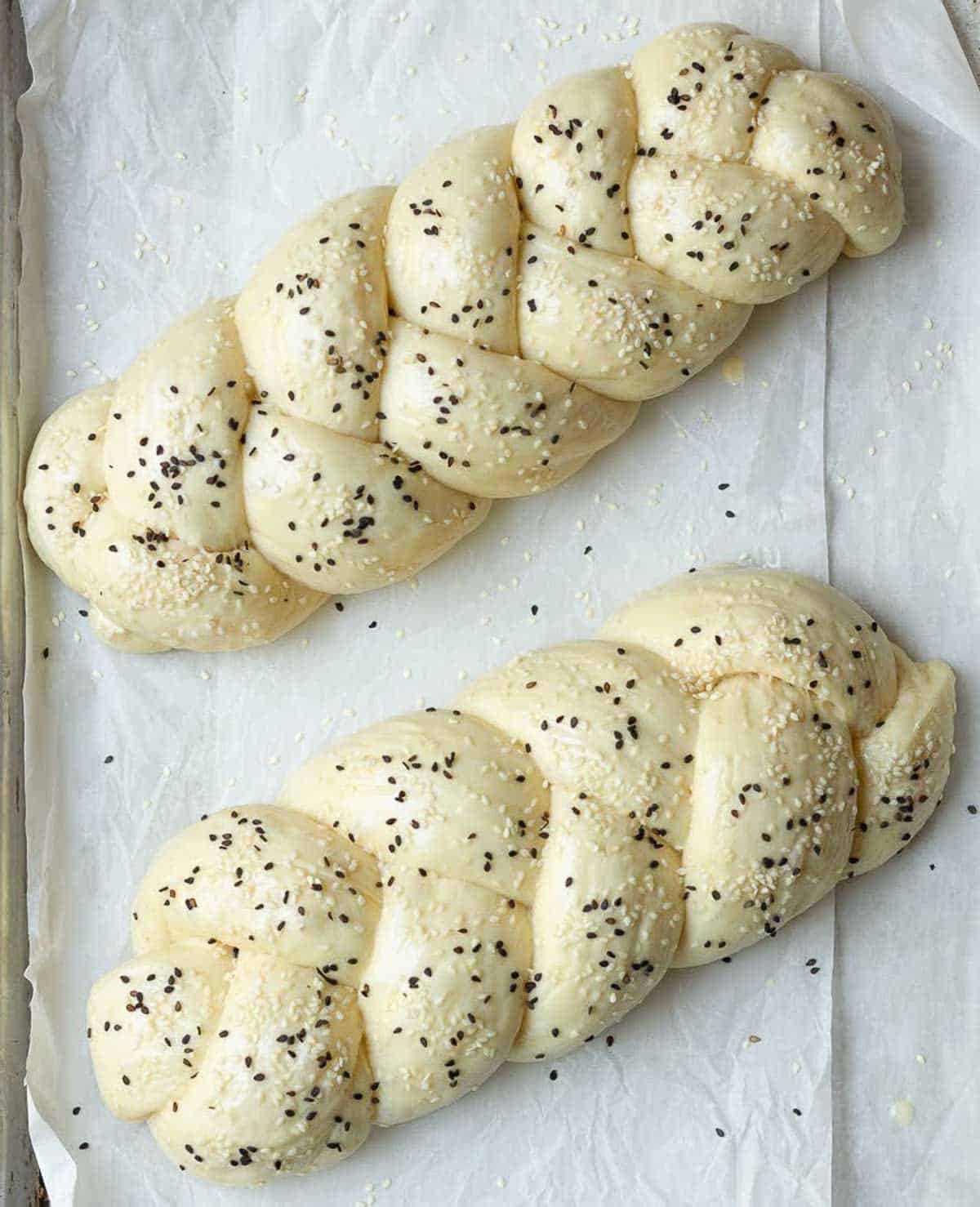
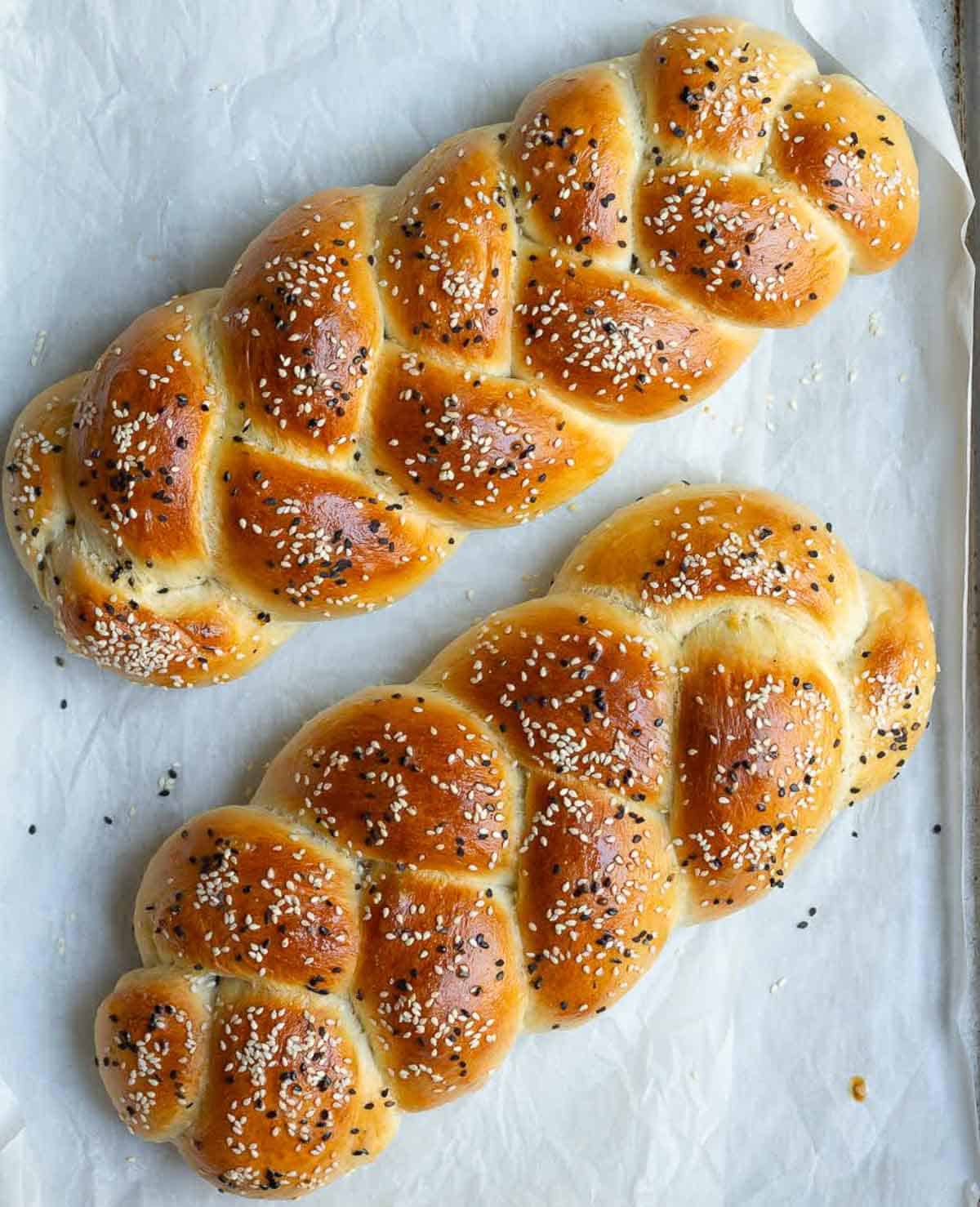
Step 16: Bake for 25 to 30 minutes, until golden brown.
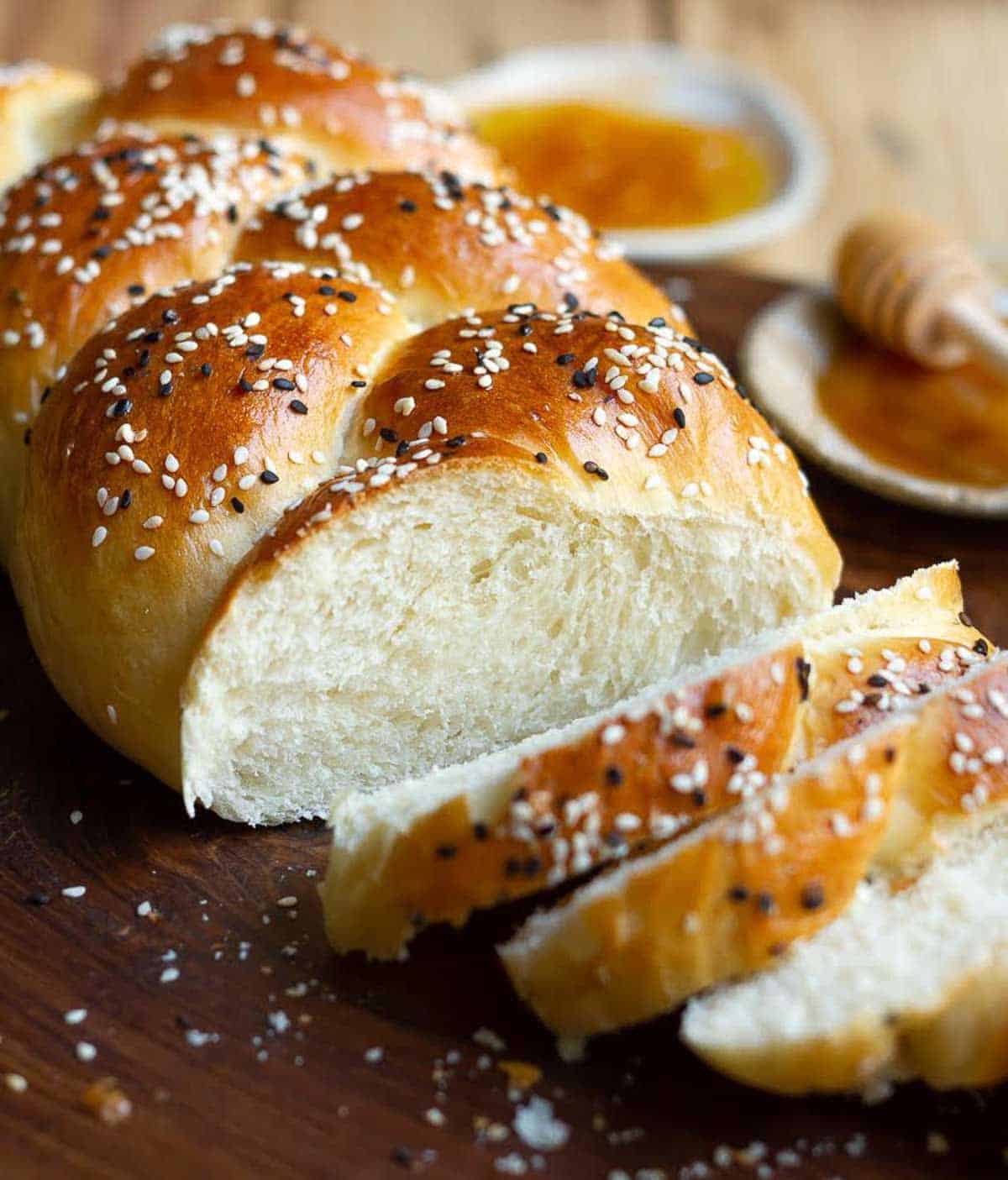
Step 17: Let the loaves cool completely before slicing them.
Top Tips
- Don't rush the rise. Challah is an enriched dough, so it can take longer to rise than a regular bread dough. When challah is not proofed enough, it’s denser, and the braids tend to split.
- Resist adding too much flour. The dough should be soft and slightly tacky, not dry. A soft dough will result in light and tender bread.
- Roll the strands evenly. For a neat, even braid, make each rope the same length and thickness. If the dough keeps springing back, let it rest for 5 minutes before trying again.
- Make sure you braid with the same tension throughout the process, or some sections of the braid will be loose and some tight, creating a misshapen loaf.
- Don't overproof the shaped dough. This can cause the bread to lose its shape after baking. It should look puffy but still hold its shape.
- Pinch the ends and tuck them underneath. This will prevent the braid from unraveling or losing its shape.
How To Serve
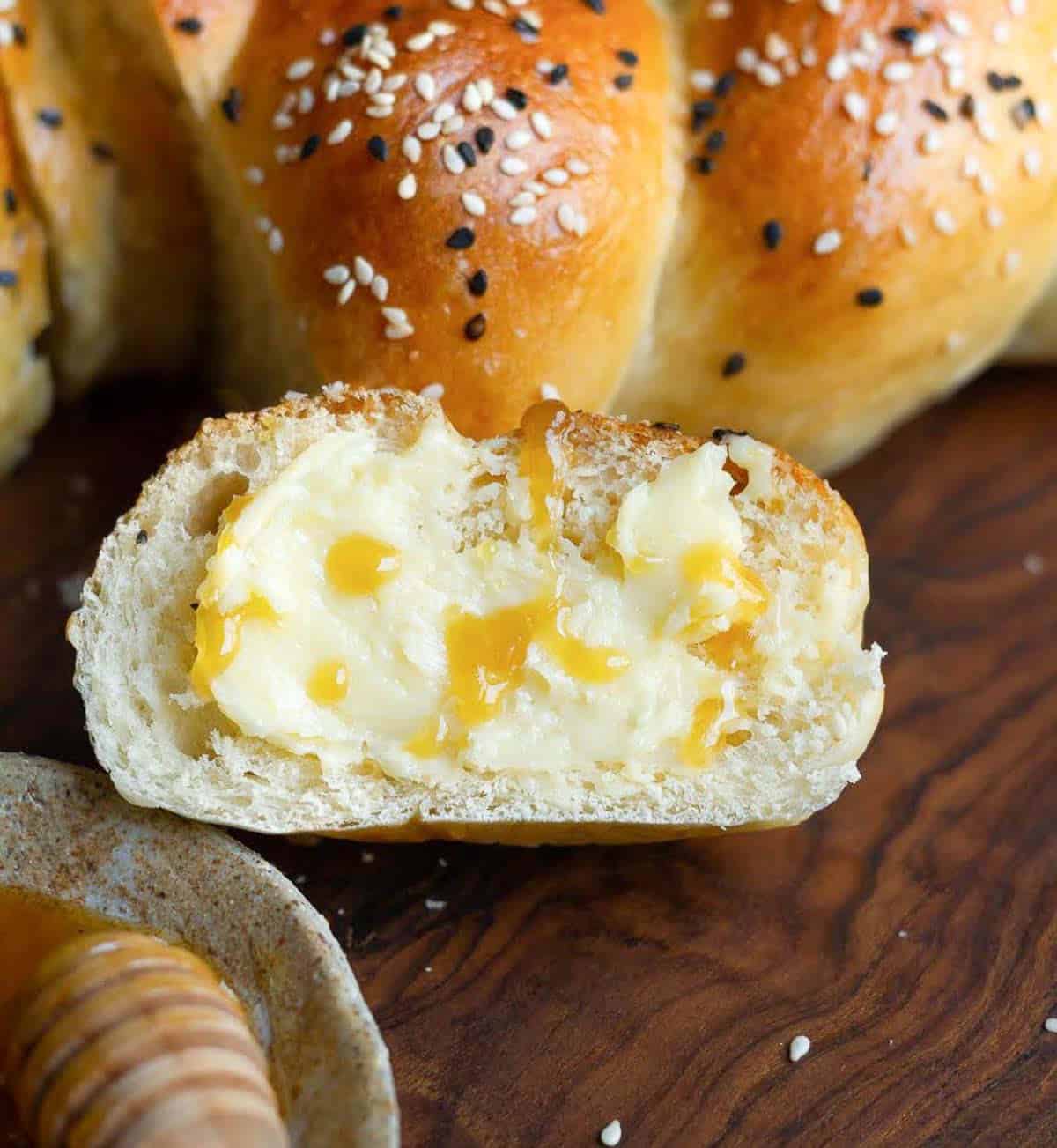
Freshly baked challah is so wonderful with butter, honey, or jam. Try it with my cinnamon honey butter, apple butter, pear butter, strawberry chia jam, or persimmon jam.
Use the leftover challah bread for making French toast or French toast casserole. It's so good for making bread puddings, like this chocolate chip bread pudding and cinnamon bread pudding.
I also love using challah for sandwiches and for serving alongside creamy pumpkin soup and roasted sweet potato soup.
How To Store
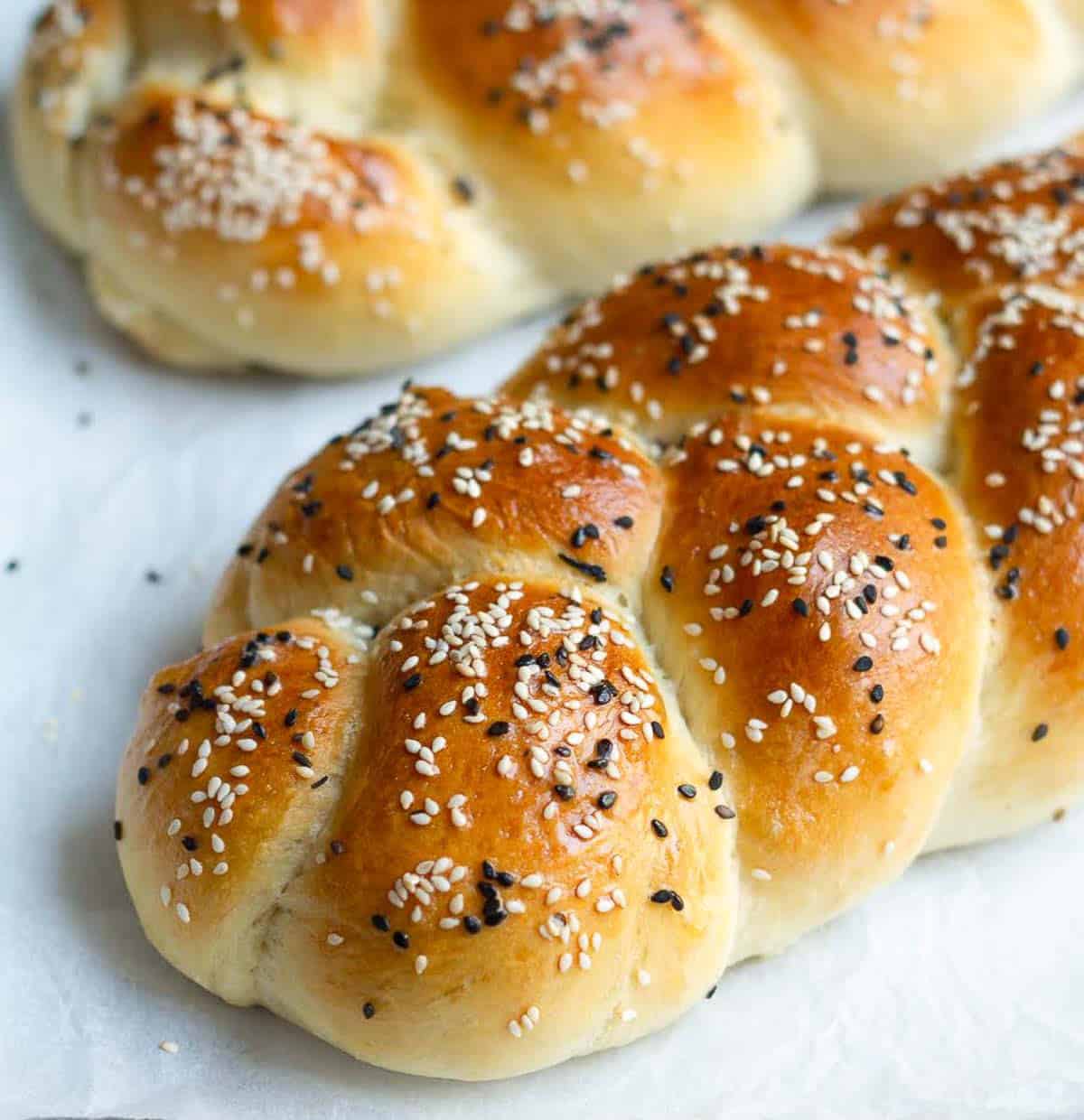
Like most homemade breads, challah tastes the best when fresh. Store at room temperature, tightly wrapped or in an airtight container for 1-2 days.
For longer storage, keep in the refrigerator for 4-5 days or in the freezer for up to 2 months.
Recipe FAQs
What is challah bread?
Challah is a braided, enriched bread, meaning it uses yeast and contains over 10% fat, eaten by Jewish communities on Shabbat and other major holidays. Across Eastern Europe, it’s known by many other names like hallah, kitke, berches, chałka, khale, etc. It can be easily made at home, irrespective of your experience level.
How do you pronounce challah?
Challah, a Hebrew word that appears in the Bible, is not pronounced with the hard “ch” sound like in chip or chai. Keep the “c” silent and sound it like “haa·luh”.
What’s the difference between brioche and challah bread?
Both brioche (French origin) and challah (Jewish origin) are enriched soft breads, but brioche is made with butter and challah is made with oil. Brioche has a richer, cake-like crumb while challah is lighter and fluffier.
Is challah dough sticky?
Challah bread dough should feel smooth, elastic, and slightly tacky. It should not stick to the bowl sides or your hands. If it’s too sticky, add a spoonful of flour and continue kneading till you get the consistency right. The key here is to use as little additional flour as you can.
How do you know when your challah is proofed and ready to bake?
The dough should look puffy and almost twice its size. Or you can do a poke test. Press a fingertip, and if the challah dough springs back instantly, it needs more time.
On the other hand, if it leaves a mark on the dough, it’s ready to be baked. Another way to know if the dough is ready to bake is to give it a wobble. If it jiggles, it’s time for the oven.
Recipe
Easy Challah Bread
Ingredients
- 2 Eggs
- 7 oz Water, lukewarm
- 2 tsp Active dry yeast
- 1/4 cup Honey
- 1 1/4 tsp Salt
- 2 tbsp Oil I used olive oil. Feel free to use any vegetable oil
- 4 cups All-purpose flour
Topping
- 1 Egg, beaten with 1 tsp water for egg wash
- Black and white sesame seeds
Instructions
- Combine the eggs, water, yeast, salt, honey, and oil in a large bowl or in the bowl of your stand mixer. Whisk them well.2 Eggs, 7 oz Water, lukewarm, 2 tsp Active dry yeast, 1/4 cup Honey,1 1/4 tsp Salt, 2 tbsp Oil
- Add in the flour and combine well until a rough mass is formed. Take the dough out on a lightly floured surface and knead for about 10 -12 minutes.You could also use your stand mixer for kneading. Knead at low speed for about 8 -9 minutes.4 cups All-purpose flour
- The dough is ready when it's smooth, soft, and slightly tacky to the touch.
- Place in a lightly greased bowl, cover, and let proof in a warm place for 1- 11/2 hours or until it doubles in size.
- Punch the proofed dough and divide into 6 equal-sized pieces.
- Roll each piece into a ball. Cover with a damp kitchen towel and let it rest for 5 minutes.
- Roll out each ball into a rope, about 7" in length. Repeat for all the dough balls.
- Now starting with the first one we rolled out, roll each strand to a length of 12".
- Now take 3 strands together. Pinch them at the top and braid them, tucking in the ends under the braid.
- Repeat with the other 3 strands.
- Carefully place on a parchment-lined baking tray.
- Cover with a damp kitchen towel or cling wrap and place in a warm place for about 1 hour or until puffy and pillowy
- Preheat your oven to 180 C / 350 F.
- Brush the loaves with egg wash and sprinkle with sesame seeds.1 Egg, beaten with 1 tsp water for egg wash, Black and white sesame seeds
- Bake for 25-30 minutes at 180 C / 350 F or until golden brown.
- Cool the loaves on a cooling rack. Slice and enjoy!
Notes
- Don't rush the rise. Challah is an enriched dough, so it can take longer to rise than a regular bread dough. When challah is not proofed enough, it’s denser, and the braids tend to split.
- Resist adding too much flour. The dough should be soft and slightly tacky, not dry. A soft dough will result in light and tender bread.
- Roll the strands evenly. For a neat, even braid, make each rope the same length and thickness. If the dough keeps springing back, let it rest for 5 minutes before trying again.
- Braid tightly, not loosely. Keep the braid fairly tight with gentle tension.
- Don't overproof the shaped dough. This can cause the bread to lose its shape after baking. It should look puffy but still hold its shape.
- Pinch the ends and tuck them underneath. This will prevent the braid from unraveling or losing its shape.


Most delicious Challah! Thank you for sharing your wonderful recipe! Do you know what may cause to the bread to lose its shape a bit? The strands were not super defined after baking.
Natasha Author
Hi Ariel, thank you very much for your lovely feedback, really appreciate it. I'm so happy you enjoyed the bread! So sometimes challah will lose its shape after baking if it was overproofed or if the braid was not tight enough. Hope this helps. Have a wonderful weekend!
Ariel Zaviezo
Thank you for the advice! I’ll give it another go this week 🙂
Natasha Author
Yayyyy! Happy baking and have a wonderful weekend!
Can you make this without a stand mixer?
Natasha Author
Hi Kara, yes you can! It will just take a bit longer and need more elbow grease :)Make sure you are kneading the dough for at least 10-12 minutes. We want a smooth, soft and a slightly sticky dough. Happy baking!
Such a good recipe! I’m not a natural baker so I was nervous to try this and after 1.5 hours of the first rise the dough was still very small so I panicked but left it longer (about 3 hours in total) but it worked it out great! Thank you x
Natasha Author
So thrilled to hear this Poppy! Thank you very much for your wonderful feedback and for following along. It means so much to me!
Made this several times and even with teens and with nutella which I folded into the length of the braids before braiding . Oh wow how it gets eaten up fast. Perfect and now my go to recipe for challah. Sometimes the dough rose quickly and sometimes it took a long time, but the bread always came out amazing ,,,,,,
Natasha Author
Hi Karun, thank you so much for your wonderful feedback! So glad this bread is well loved in your house and with Nutella...that sounds amazing!! xx
Can I use rapid rise instant yeast instead of regular dried yeast for your challah bread?
Natasha Author
Yes, that would work just fine. 🙂
Followed instructions to a T ( mixer option with dough hook for 9 minutes) and yet I ended up with a sticky mess that I was unable to work with… Had to add a tone more flour just to get it workable… Have no idea what it will taste like!
Natasha Author
Oh I'm so sorry this recipe didn't work out well for you. I hope the bread tasted fine though. Look forward to hearing from you. Thank you for your feedback and support.